
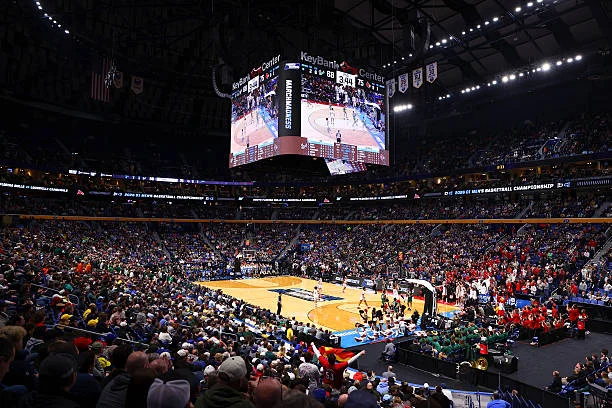
If you’ve ever sat down to watch a college basketball game, you’ve probably noticed something interesting. The listed game time seems short, but the actual viewing experience feels much longer.
This leads to a common question: how long are college basketball games in real time?
The answer isn’t as simple as the clock suggests. While the official duration is fixed, several in-game factors stretch the total time significantly. Understanding both the official structure and the real-world flow of a game helps explain why these matchups often last much longer than expected.
Official Game Length
College basketball games, governed by the NCAA, are officially 40 minutes long.
This time is divided into:
- Two halves
- Each lasting 20 minutes
Unlike professional leagues, there are no quarters in standard college basketball games. The game clock runs continuously during play but stops frequently for fouls, timeouts, and other interruptions.
At first glance, 40 minutes may seem short compared to other sports, but that only tells part of the story.
Real Game Duration
In real-world conditions, most college basketball games last around 1 hour 45 minutes to 2 hours 15 minutes.
This extended duration comes from the natural flow of the game rather than the clock itself. Every stoppage, review, and strategic pause adds time, turning a 40-minute game into a much longer viewing experience.
Close games, in particular, tend to stretch even further because teams use timeouts strategically and fouls increase in the final minutes.
Why Games Take Longer Than 40 Minutes
Clock Stoppages
The biggest reason games last longer is that the clock stops frequently. Every foul, out-of-bounds play, or violation pauses the game. These stoppages may seem small individually, but they add up over the course of a full match.
Timeouts and Breaks
Each team is allowed multiple timeouts, which coaches use to adjust strategies or slow down momentum. In addition, there are scheduled media timeouts, especially in televised games, which significantly increase total duration.
Halftime Interval
Between the two halves, there is a halftime break that typically lasts 15 to 20 minutes. This allows players to rest and coaches to make adjustments, but it also adds to the overall length of the game.
Fouls and Free Throws
As games progress, especially in close situations, fouls become more frequent. This leads to free throws, which stop the clock and extend the game further.
In the final minutes, teams often commit intentional fouls to regain possession, which can stretch the ending significantly.
Overtime Rules
What happens if the game is tied?
If the score is tied at the end of regulation, the game goes into overtime.
Each overtime period lasts 5 minutes, and there is no limit to how many overtime periods can be played. Games will continue until a winner is decided.
Overtime can dramatically increase the total duration, especially if multiple extra periods are required.
College vs NBA Game Length
One of the biggest differences between college basketball and professional basketball lies in game structure.
In the NBA:
- Games are 48 minutes long
- Divided into four quarters
In college basketball:
- Games are 40 minutes
- Divided into two halves
Despite being shorter on paper, college games can feel just as long due to stoppages and game flow. The difference in structure also affects pacing, strategy, and how teams manage the clock.
Factors That Make Some Games Longer
Not all college basketball games last the same amount of time. Some extend well beyond the average due to specific conditions.
Close games naturally take longer because teams use more timeouts and commit more fouls. High-scoring games also involve more stoppages, as each basket leads to inbound plays and resets.
Televised games tend to run longer due to commercial breaks, while tournament games often include additional delays for reviews and heightened pressure situations.
Also Read: Dan Marino Super Bowl Appearances: Record, Career & Legacy
Tournament Game Duration
During major events like the NCAA Tournament, games often feel longer than regular-season matchups.
This is because:
- More media coverage leads to longer breaks
- Games are more competitive and intense
- Coaches use every strategic option available
As a result, tournament games frequently reach or exceed the upper range of typical game duration.
Game Flow and Viewer Experience
From a viewer’s perspective, the length of a college basketball game depends heavily on how the game unfolds.
Fast-paced games with fewer fouls tend to move quickly and feel shorter. On the other hand, tightly contested matchups with frequent stoppages can feel much longer, even if the actual time difference is not extreme.
This variation is part of what makes college basketball unpredictable and engaging. The same 40-minute structure can produce very different viewing experiences depending on the situation.
Conclusion
So, how long are college basketball games?
Officially, they last 40 minutes, divided into two halves. But in reality, most games run between 1 hour 45 minutes and 2 hours 15 minutes, depending on stoppages, timeouts, and game conditions.
Understanding this difference helps set the right expectations, whether you’re watching casually or planning your time around a game.
In the end, the structure may be simple, but the way the game unfolds is what truly determines how long it lasts.
FAQs
How long is a college basketball game in real time?
Most games last between 1 hour 45 minutes and 2 hours 15 minutes.
Why do college basketball games take longer than 40 minutes?
Because of clock stoppages, timeouts, fouls, and halftime breaks.
How long is halftime in college basketball?
Halftime usually lasts 15 to 20 minutes.
Can college basketball games go beyond 2 hours?
Yes, especially if the game goes into overtime or has many stoppages.